Instead of having you mechanically memorize English, the common language of the programming world, we have
prepared a training that teaches it directly through real-life business scenarios.
Our goal is to help IT professionals communicate more effectively in international projects by expanding their
vocabulary. We teach technical terms not only with their dictionary equivalents, but also with real examples from
the programming world and in the right context.
While conveying the meanings of the words and how they are used in projects, through the lessons you will learn
the correct pronunciations, practice making active sentences, and reinforce your knowledge with review exercises.
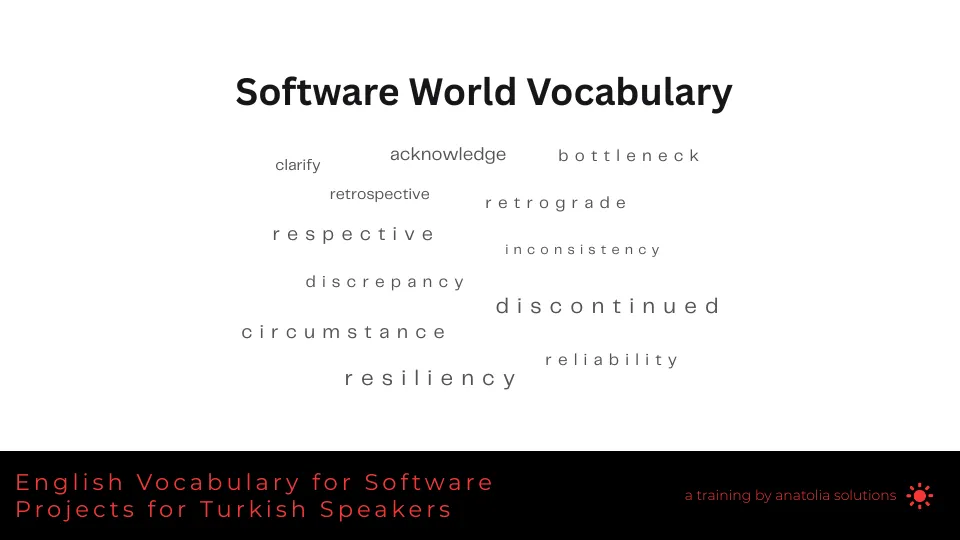
By the end of the lessons, you will have fully learned the most common 100 words together with your instructor.
Afterwards, with the help of the Programming English Study Guide and Review Practice Notebook that will be given
to you for free, you will be able to continue developing your vocabulary up to 2,222 words.
Ready to get started? Reach out on WhatsApp to explore custom solutions, book a discovery call, or schedule a visit to your company.
The training is ideal for software developers working on global projects with international teams, IT
professionals who want to communicate more effectively in cross-cultural meetings, individuals evaluating
remote work opportunities, and those who want to overcome language and cultural barriers by contributing to
open source projects.
Are there any prerequisites to attend the training?
There are no special prerequisites. The training is suitable for all levels.
How long is the training?
The training takes 16 hours, but can be adapted to your needs.
Can we get the training in a classroom environment in addition to remote training?
Yes, we can also plan it as face-to-face classroom training when there are enough people.
Will a certificate be issued at the end of the training?
No, we do not issue a certificate at the end of the training because we believe that certificates and
diplomas have now lost their validity. However, if you need a certificate of participation, we can prepare a
document for you.
What materials are given to the training participants?
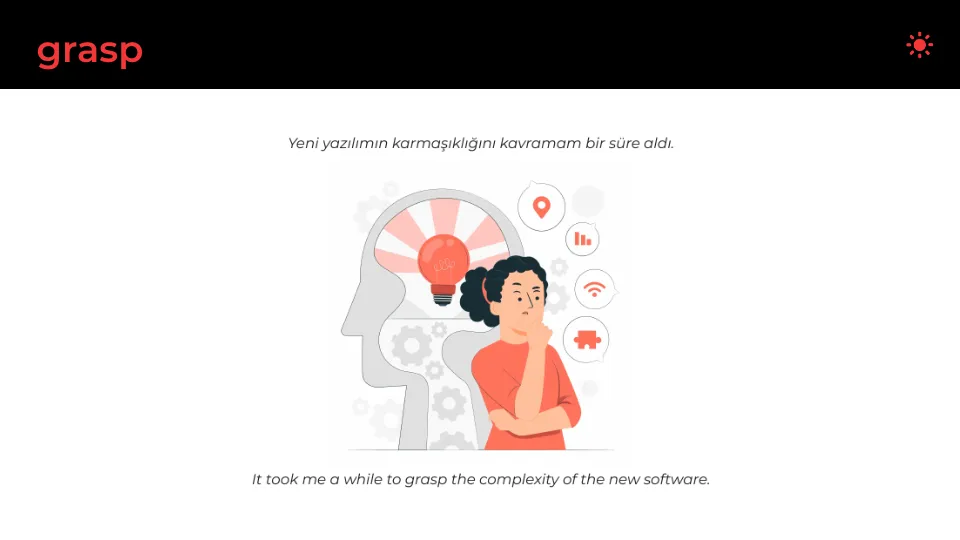
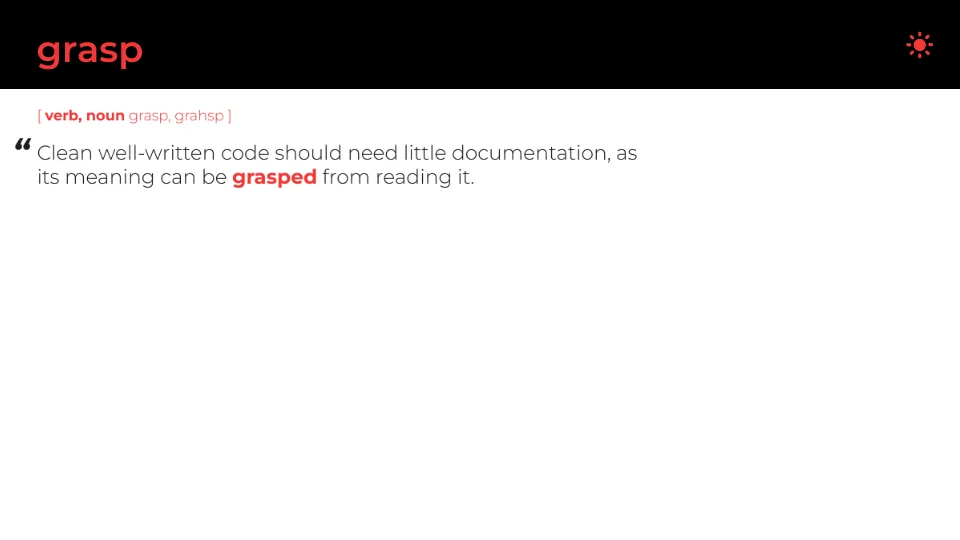
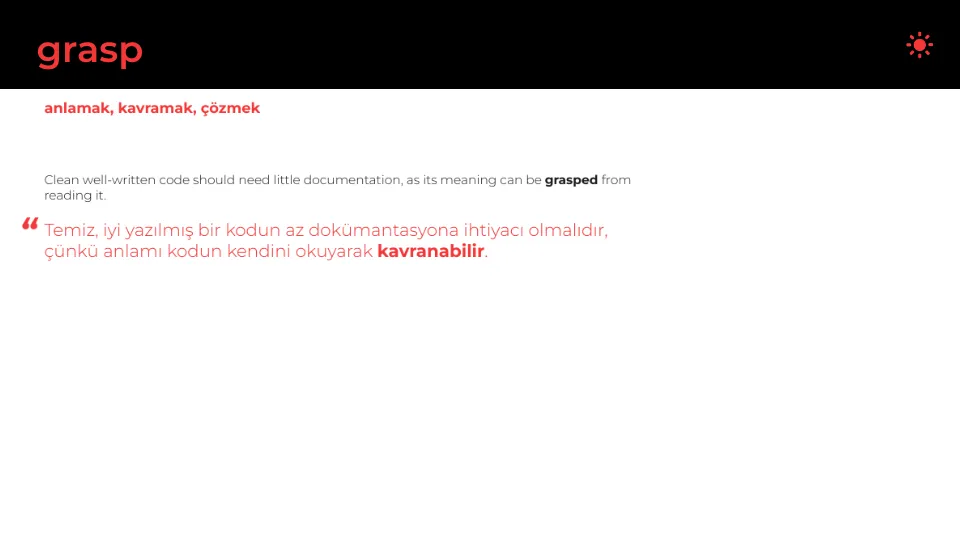
During the training, the instructor explains English words with sample sentences taken from the software
world. While the Turkish meaning of each word is taught, examples of how this word is used in communication in
software projects are also presented. Thus, it becomes easier to understand both the word itself and the
context in which it is commonly used.
Are there opportunities for practice in the training?
Yes, there are sections where participants will practice speaking during the training.
Is there any homework?
Yes. Our training begins with interactive sessions where you learn the meanings and correct pronunciations of
new words.
The homework you need to do between lessons is to complete the exercises in the review practice notebook. At
the end of four lessons, you will have learned 100 words together with your teacher.
After this stage, you should continue to improve your vocabulary by studying on your own. Thanks to the study
guide and the review practice notebook, you can reach 2,222 words in total. But your work will still not be
done, you should continue to expand your vocabulary in the next level as well.
Which programming languages does the training focus on?
The training does not focus on the technical aspects of programming. Instead, its aim is to improve your
vocabulary so that you can better understand your teammates and actively participate in business
communication.
For example, take this sentence: 'In case you are adamant on using multiple inheritance, it should be done in
C++.'
In our course, the word 'adamant' is taught with its meaning of being persistent, stubborn, determined. At
the same time, you also hear that the concept of 'multiple inheritance' can be implemented in C++.
However, the course does not go into the technical details of this. The focus is on language and
communication.
Is this a general conversational English course or software-specific?
It is 100% software engineering contextual English, focusing on daily standups, pull request reviews, architectural debate terminology, and technical documentation.
Have More Questions?
Have questions about our solutions? Message us on WhatsApp to discuss your goals, set up a virtual meeting, or arrange an on-site consultation.