
Artificial intelligence is becoming increasingly capable of assisting with medical image analysis. The challenge for many clinics is not whether AI is useful, but how to adopt it without compromising patient privacy or disrupting existing workflows.
One of the strongest foundations for this approach is Project MONAI (Medical Open Network for AI), an open-source framework developed specifically for medical imaging. Rather than adapting general-purpose AI to healthcare, MONAI was designed from the beginning to work with clinical imaging formats such as DICOM and NIfTI and to integrate with radiology workflows.
Today, MONAI is supported by organizations including NVIDIA, the National Institutes of Health (NIH), Stanford University, and King's College London, and has become one of the leading platforms for building medical imaging AI solutions.
More importantly, it has proven itself outside the research laboratory.
At Mayo Clinic Florida, the Center for Augmented Intelligence in Imaging deployed numerous MONAI-based AI models directly into clinical practice. These systems assist with tasks such as breast density assessment, identifying MRI-unsafe implants from chest X-rays, and segmenting brain MRI abnormalities—all while fitting into the radiologists' existing workflow rather than replacing it.
This demonstrates an important principle.
Successful medical AI should become part of the workflow, not another application that clinicians must learn to use.
We can build the same type of architecture for private clinics and medical centers using open technologies and locally hosted infrastructure.
A dedicated on-premises AI server can receive medical images, process them using MONAI-based models, and return results within seconds—all without transmitting patient data to external cloud services. The system can be integrated with your existing workflow or provided through a lightweight web interface that requires minimal training.
The real advantage comes over time.
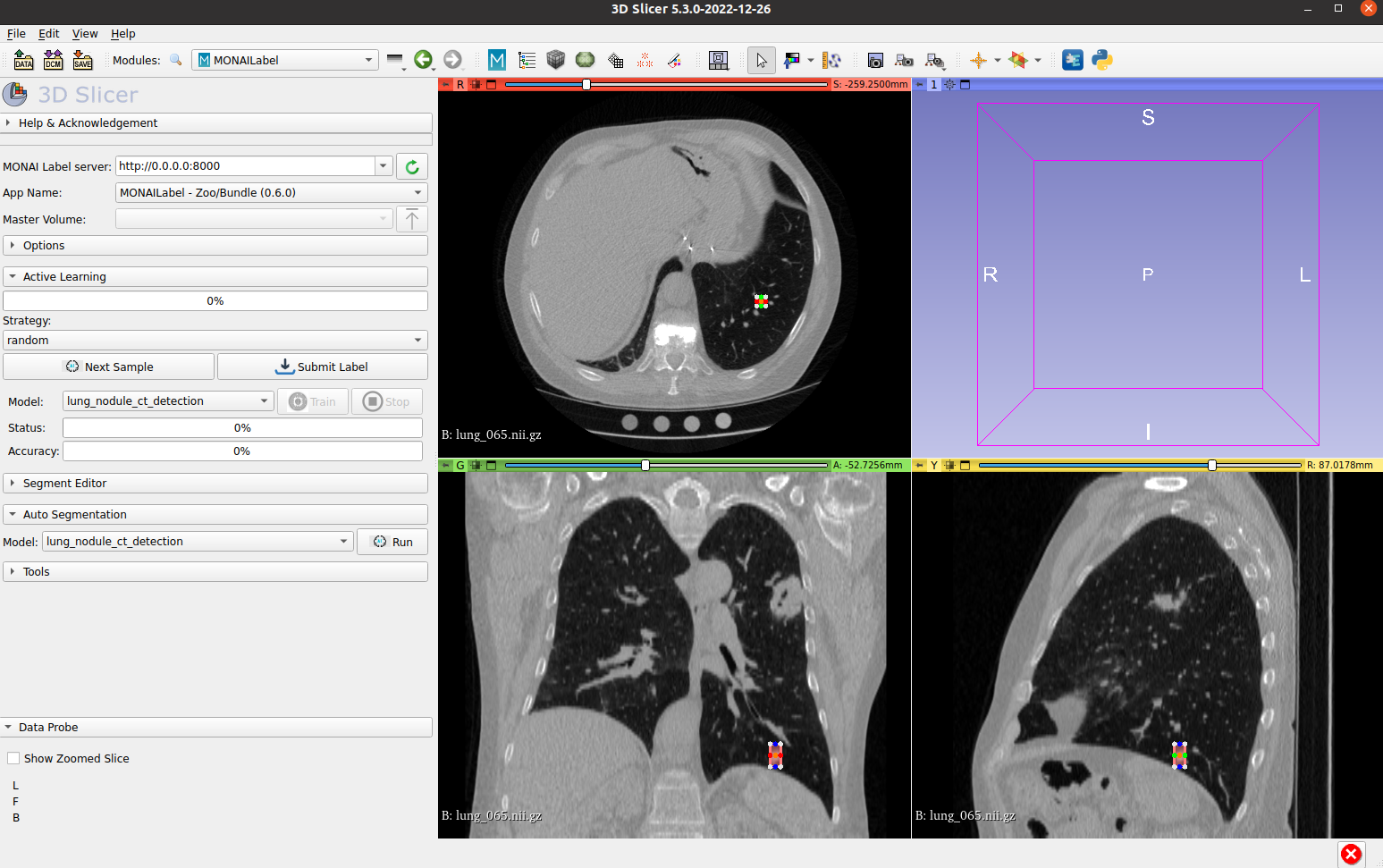
Using MONAI Label, clinicians can review AI-generated annotations and make corrections whenever necessary. Those corrections become valuable training data, allowing future models to better reflect your own clinical practice, imaging protocols, and patient population.
Instead of relying entirely on a generic model trained elsewhere, your clinic gradually develops AI that learns from your own expertise.
The goal is not to replace clinical judgment.
It is to build a private AI assistant that becomes more useful every time your specialists use it.
Prepared by Anatolia Solutions Team